It’s late in Mumbai. Priya gets a video call from a deaf customer in Mexico who uses sign language. He's upset because a critical feature isn’t working, and he needs it fixed before his morning presentation. Meanwhile, her manager in Tokyo can't authorize a refund because context keeps getting lost in rushed translations.
This happens constantly. Approximately 45% of workers globally are multilingual, yet most companies still struggle to communicate effectively across languages and abilities.
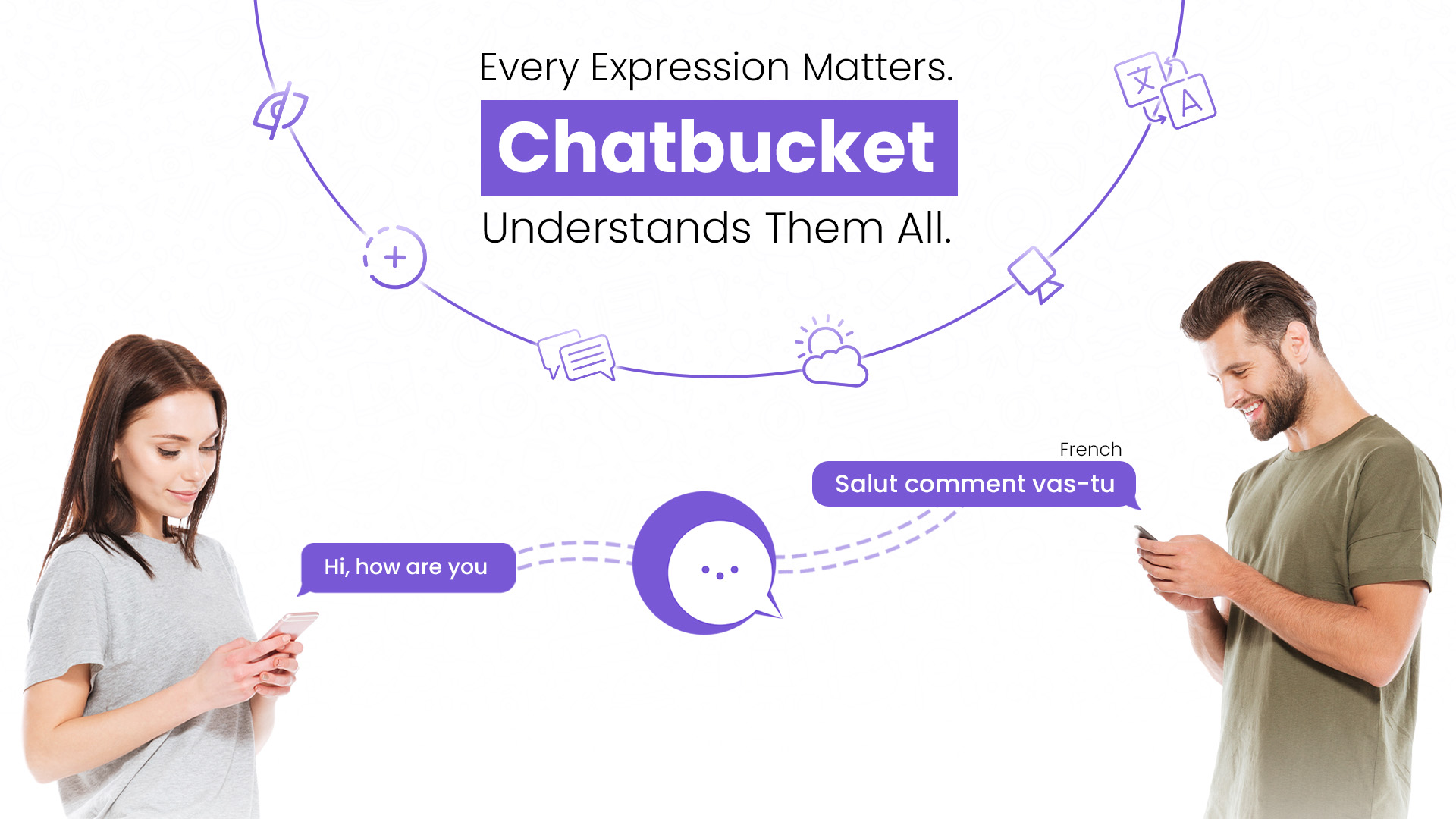
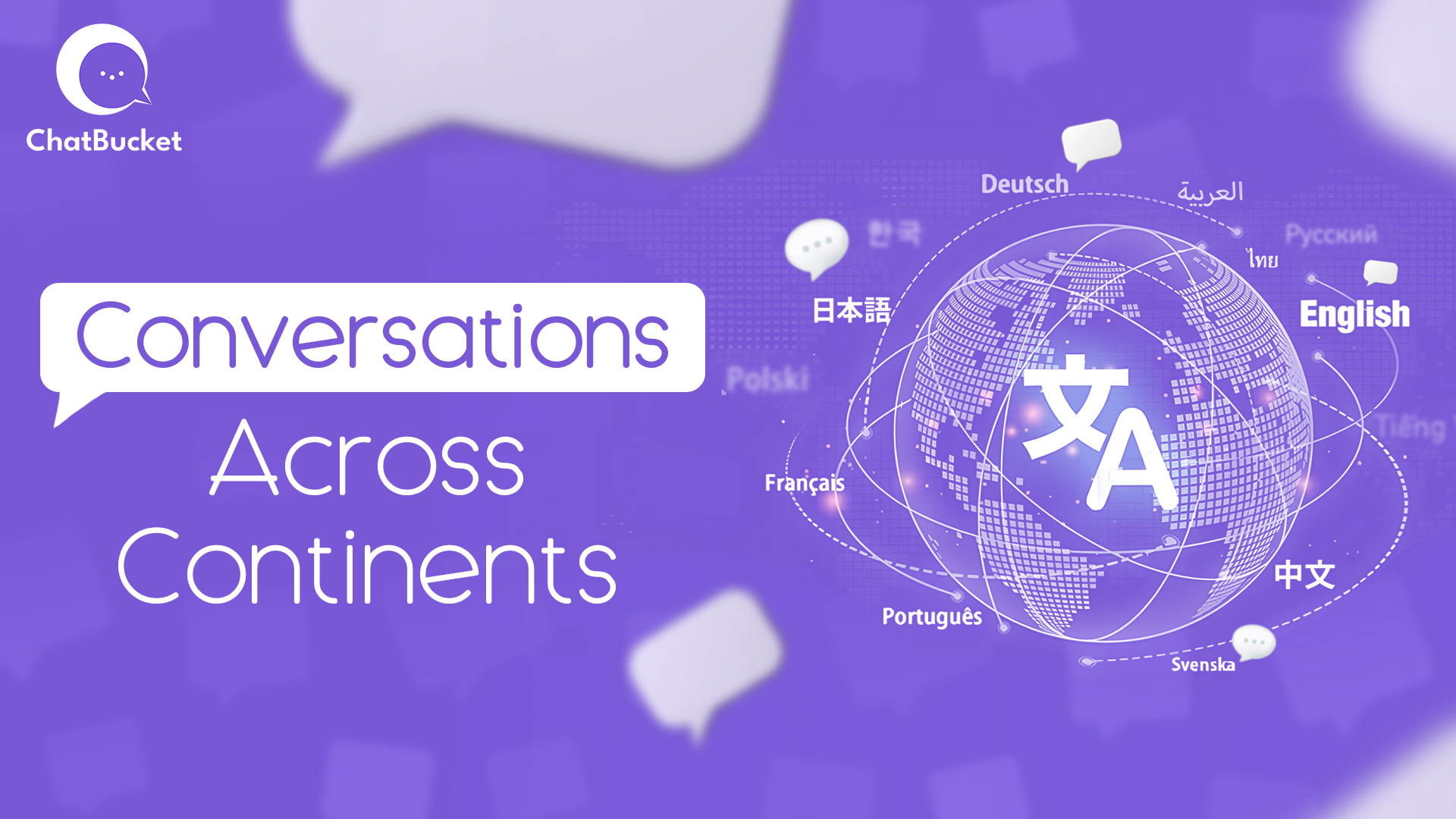
Enterprises are not looking for a translation tool, but rather a multilingual communication platform for enterprises that handles text, voice, video, and sign language, while preserving emotion and context.
Most companies face an impossible choice: give up on some customers or patch together five different tools that don't work together. Support teams juggle Google Translate, Zoom, separate accessibility tools, and then hope nothing breaks.
We built Chatbucket as a complete multilingual communication platform for enterprises because we kept seeing the same problem: hospitals unable to communicate during emergencies, e-commerce stores losing customers at checkout, and global teams being burnt out trying to share ideas across languages.
Miscommunication costs $7-10 million in language-related delays. Bad customer service costs businesses $75 billion annually. Most customers prefer to buy from companies that communicate in their own language.
Here's the pattern: A customer emails in Spanish about billing. The agent translates to English, responds, and auto-translates back. The translation is stiff, missing the customer's frustration entirely. They escalate to a phone call and switch to another language. Now you need someone who speaks both languages. However, by the time you find a translator, your customer will have already left a negative review and switched to a competitor.
Or imagine if a deaf customer tries to video chat. But your team can't sign and is forced to type out everything. A quick conversation then becomes a tedious exchange of text that leaves them feeling isolated.
Hiring multilingual support reps is an expensive affair. Basic translation tools seem cheaper, but they damage your brand.
Language barriers kill productivity. Nearly 70% of multinational companies operate in multiple languages on a daily basis.
Your best UX designer speaks Telugu. Your dev team is split between Tokyo, Mexico City, and Austin. Everyone "speaks business English," but really? Every Slack message is retyped, and great ideas stay hidden because explaining them in another language is like speaking to a wall.
Meetings get messy. Jokes land for some, not others. "We're on it" means urgency to one team, reassurance to another. You build in the wrong direction.
Your deaf engineer is unable to participate in meetings because of the lack of sign language support; auto-captions are only 60% accurate. You lose the best talents on the team because the infrastructure isn't built for them.
40% of global consumers won't buy from websites not in their native language. E-commerce in Southeast Asia, Latin America, and Africa is projected to grow by 60% through 2025.
You translate your website for Brazil. Technically sounds correct, but robotic. Your playful brand voice may sound confusing or offensive because idioms don't always translate well across countries. Your checkout still asks for ZIP codes instead of CEP (Brazil's postal code). And customers abandon carts in frustration.
You hire native support staff, but they're overwhelmed handling multiple languages. Your expansion becomes another support nightmare.
The alternative? Stick to one language and capture maybe 5-10% of the market, locking out 90 to 95% of potential customers. Your competitors, even if their product isn't necessarily the best, will win simply because they make people feel understood.
That translation app that came pre-loaded on your phone? It doesn't work for your business. Studies show accuracy for business-critical communication hovers around 85-90% for common language pairs, dropping further with less common languages or industry terms. That 10-15% error rate is where lawsuits are filed, and customers are lost.
Most businesses attempt to use 4-7 different tools: one for translation, another for calls, a separate tool to extract documents in the native language, and another for accessibility, among others. None of these tools syncs, and your team wastes a lot of time copying and pasting between systems.
Consumer translation tools replace words in Language A with words in Language B. That's fine for "Where is the bathroom?" It falls apart in business contexts.
Your sales rep tells a prospect: "We're absolutely killing it with this new feature. Our clients are dying to get their hands on it." The literal translation becomes: "We are murdering it with this function. Our clients are experiencing death to obtain it." Your enthusiastic pitch now sounds like a crime confession.
Cultural context disappears. In Japanese business culture, "I'll consider it" often means "No, but I'm being polite." In American business culture, it means "Maybe, I need more information." Translation tools convert the words but miss the actual meaning entirely.
Then there's the accessibility gap. Your customer wants to video chat. Your deaf employee needs to join. Your blind customer needs help with the product demo. Your Spanish-speaking customer prefers voice but needs a text summary.
With regular translation tools, you'd need six different applications, each with its own login, interface, and privacy policy. Your customer service rep is managing six windows, copying information between them, and making mistakes because the cognitive load is overwhelming. And the translation is still inaccurate.
Consumer translation apps were built for tourists asking where the train station is, not for businesses handling sensitive data, building long-term relationships, or ensuring accessibility as a core feature.
The tools we're stuck with today weren't built for the way global businesses actually communicate. They can't handle the complexity, the emotion, or the humanity that real conversations require.
We're building Chatbucket as a true multilingual communication platform where language barriers, accessibility needs, and authentic connection aren't competing priorities. They're unified from the ground up.
One platform. Every communication mode. Actually inclusive.
The future of business is global, diverse, and accessible. The companies that win will be the ones that make every customer and employee feel truly heard, regardless of language or ability.
We're launching soon.
This isn't about choosing between features anymore. It's about communication that actually works for everyone. Want to see how Chatbucket works for your specific situation? Let's chat!
Join the Waitlist for Early Access